Event Report: CHAT – Empowering Creativity: The Role of Assistive Technology in the Arts
Date: Friday, 7 March 2025 | Time: 14:00 – 16:30 | Venue:The Cube, Project Arts Centre, Dublin In partnership with: Disrupt Disability Arts Festival Hosted by: CHAT (Community Hub for Accessible Technology) – FreedomTech, Enable Ireland & Disability Federation of Ireland
Sponsored by: Disrupt Festival and Sight and Sound Technologies Attendee: 70 in‑person • Unlimited online Accessibility: Irish Sign Language, real‑time captions, audio description, hybrid streaming
Event Overview
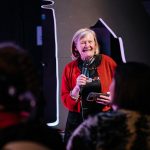
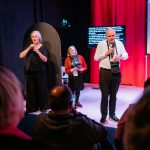
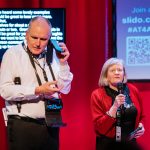
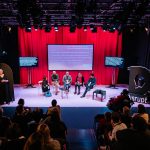
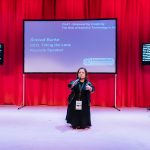
Hosted jointly by CHAT (FreedomTech, Enable Ireland and the Disability Federation of Ireland) and Disrupt Festival, this two‑hour programme explored how assistive technology (AT) is transforming artistic practice and cultural participation. Moderated by Sinéad Burke (Tilting the Lens), the afternoon combined keynotes, case‑study demos, a multi‑voice panel, and an interactive workshop that harvested live audience data via Sli.DO polls.
Welcome
Alan James Burns – Director, Disrupt Festival
Sarah Gavra Boland – FreedomTech
Sophie – Project Arts Centre
Opening
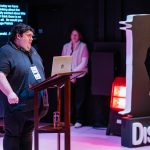
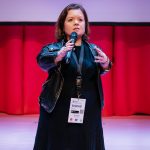
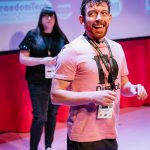
Sinéad Burke, CEO of Tilting the Lens, framed access as “a creative generator rather than a compliance chore.” She urged the sector to replace one‑off accommodations with systemic design that embeds disability expertise from project inception. Citing successes at the National Gallery and Google, Burke emphasised three levers for change: (1) education that centres lived experience; (2) advocacy that shifts mind‑sets from charity to equity; and (3) design that treats accessibility as a catalyst for aesthetic innovation. Her call‑to‑action: “What we build for disabled artists today becomes the architecture of inclusion for everyone tomorrow.”
Key Presentations
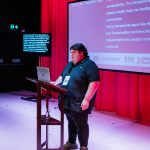
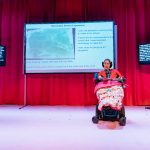
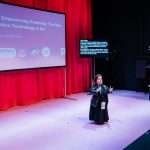
Student Keynote – Caoimhe Boers & Lecturer Andrea
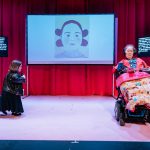
Gorey School of Art student Caoimhe Boers illustrated the power of personal assistance, adaptive tutorials and the 3‑D modelling platform Blender in realising her digital sculptures. She described AT as a “scaffold that disappears,” allowing the audience to focus on artistic intent rather than impairment. Lecturer Andrea Byrne echoed this, noting that differentiated learning pathways benefit the entire cohort.
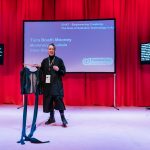
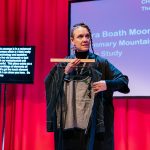
Case Study – Tara Boath Mooney: Mammary Mountain
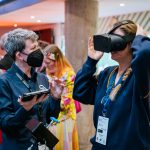
Interdisciplinary artist Tara Boath Mooney presented her immersive VR work exploring breast‑cancer journeys. Head‑mounted displays paired with haptic vests enabled visitors to “feel” audio‑reactive textures mapped to survivors’ stories. Mooney credited open‑source software and collaboration with clinical partners for achieving both emotional depth and access features such as adjustable contrast and voice‑led navigation.
Panel – Assistive Technology in Creative Practice: Innovation & Reality
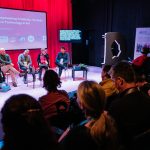
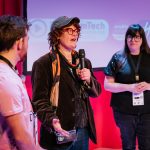
Facilitator: Sinéad Burke Panelists: Damien Mills (Performance Without Barriers), Fidelma Morris (See Hear Play), Padraig Naughton (Arts & Disability Ireland), Ciaran Taylor (Sightless Cinema).
Key insights
• Co‑design with disabled artists is non‑negotiable.
• Production planning must budget for AT from day‑one.
• Touring accessible work demands portable, open‑standards tech.
• Upcoming European Accessibility Act (in force June 2025) is a catalyst – be ready.
Damien Mills (DRAKE NI / Performance without Barriers) highlighted plug‑and‑play MIDI controllers and eye‑tracking drum pads that allow performers with limited mobility to trigger complex percussion phrases in real time.
Fidelma Morris (Enable Ireland – See Hear Play) reported that low‑cost Raspberry Pi kits paired with switch interfaces let mixed‑ability classes co‑compose audio‑visual pieces, building social as well as creative capital.
Padraig Naughton (Arts & Disability Ireland) cautioned that while artist residencies and captioning grants are growing, the “missing middle” is ongoing technical support once funding cycles end. He championed a national equipment‑rental scheme to reduce duplication and waste.
Ciaran Taylor (Sightless Cinema) described facilitating blind and sighted collaborators to devise “audio‑only cinema” through layered sound design and live Foley performance. He emphasised that low‑latency networking and tactile mixing consoles make remote co‑creation possible, and called for venue investment in surround‑sound rigs so audiences can experience spatial storytelling.
The panel converged on three priorities: embed disabled technologists in R&D teams; create a cross‑sector repository of accessible tool‑chains; and mainstream paid accessibility roles in arts organisations.
Case Study – Our Place
Patrick Fitzgerald presented this multi‑sensory installation (neon, multi‑channel sound, tactile light) embedded with Lámh, braille, and audio‑caption layers – a model for born‑accessible exhibition design.
Workshop Highlights
The workshop captured 100+ qualitative responses facilitated by Stuart Lawler (Sight and Sound Technologies) and Siobhan Long (Enable Ireland) Workshop results chat – Arts
Examples of Assistive Technology in Action
Hybrid gallery talks: Zoom sessions paired with tactile postal packs for blind/VI audiences.
Grid software & switch / eye‑gaze access powering music‑making and digital illustration.
Embedded audio description scripted into performances from inception.
Surround‑sound “Listen Together” systems enriching shared listening.
Speech‑to‑text & open captions in theatre, Opera, and Q‑Lab cueing.
Haptic frequency mapping translating sound to vibration for Deaf patrons.
Virtual 3‑D venue walkthroughs aiding artists, crews, and audiences pre‑visit.
Integrated design success stories: Stopgap Dance’s Living Fiction, Lost Voice Guy (AAC), Sarah Ezekiel (eyegaze art).
Instrument hacking: Harpeiji adapted for hand‑injury musician; eye‑focus triggering sample playback; Soundbeam & Musica11y.net for gestural composition.
Challenges Identified
Category
Representative remarks
Time & Culture
“Short production turnarounds leave no room for access R&D.”
Awareness & Language
Fear of ‘getting it wrong’; lack of shared AT vocabulary.
Funding & Procurement
Subscription‑based apps and bespoke rigs exceed project budgets.
Skilled Personnel
“Not enough practitioners offering the services in Ireland.”
Infrastructure
Physical mounting solutions, transport, and reliable connectivity.
Siloed Models
Reductive funding frameworks that separate ‘art’ and ‘access’.
Supports & Opportunities
Seed‑funding panels that underwrite both tech and creative labour.