
CHAT – AT in Action: From Rights to Reality
17 February 2026 | St John of God Community Services | Stillorgan | Hybrid | Social Inclusion Week
CHAT – AT in Action: From Rights to Reality brought together Assistive Technology (AT) users, DigiCoaches, clinicians, researchers, service leaders, and advocates to ask a difficult but necessary question:
If Assistive Technology is a right — why does access still feel uneven?
Delivered in partnership with FreedomTech, this Social Inclusion Week event focused on lived experience, system gaps, and what needs to change.
Opening Frame: Digital Exclusion Is Inequality
Opening the event, CEO Kevin Madigan of St John of God Community Services made a clear statement:
- Digital exclusion is not an inconvenience – it is inequality.
- Assistive Technology is not specialist equipment – it is infrastructure.
- DigiCoach is not a pilot – it is a systems response.
He challenged the room and those joining online to consider whether Ireland is structurally organised to deliver AT as a right or whether access still depends on luck, location, and persistence.
DigiCoach: From Dependency to Agency
MC Declan Meenagh and Jade McCormack, DigiCoaches with Fighting Blindness, and Patrick Fitzgerald, DigiCoach from St John of God, outlined how DigiCoach redistributes expertise.
Key messages included:
- Moving from digital dependency → to digital agency
- Lived experience as the workforce, not consultation
- Peer-led digital inclusion builds confidence faster
- Employment pathways are essential for sustainability
Patrick referenced the potential of placing lived experience at the centre of AT systems. He said:
“We need to be out there all across Ireland ?”
The room reflected on how DigiCoach roles must move into permanent, paid service structures.
AT in Action: Lived Experience
Marcus Long – Smartphone as a Pathway to Autonomy
Through accessible smartphone technology, Marcus has gained:
-
Greater independence in daily life
-
Direct communication with family and friends
-
Control over routines and organisation
-
Confidence in accessing information on his own
Marcus shared how his smartphone went from intimidating to a practical tool for independence. At first, using it felt overwhelming. There was fear of pressing the wrong thing, uncertainty about accessibility features, and limited structured support to build confidence. Like many people, he encountered systems that often assume difficulty rather than potential.
What changed was not simply having a device; it was having time, encouragement, and belief. As Marcus learned how to use built-in accessibility features and everyday apps, the phone became a gateway to autonomy. He now manages aspects of his routine independently, takes and shares photographs with family, searches for information when needed, and communicates more confidently without relying on others to mediate.
His story illustrated a key message from the day: independence is built gradually. It grows through practice, support, and opportunity. Technology on its own does not create autonomy, but when paired with belief and guidance, it becomes a powerful enabler of participation.
Marcus reminded the room that digital inclusion is not an abstract policy. It is everyday control. It is a connection. It is confidence. And that is why accessible technology is a rights issue.
Val Healy – Assistive Technology at Home: Confidence, Control, and Quality of Life
From Assistance to Control
Val described how smart home devices helped her:
-
Manage daily routines more independently.
-
Control aspects of her home environment
-
Reduce reliance on others for small but essential tasks.
-
Increase her sense of safety and autonomy.
She explained that these changes were not dramatic overnight transformations. They were incrementally built through learning, experimentation, and confidence-building.
Val described completing an Assistive Technology course as a real turning point in her journey. Rather than being shown devices and told how to use them, she learned how the technology actually works, how to personalise it to suit her own needs, and how to problem-solve when something did not go as planned. That process built her confidence to explore new tools independently and to see technology as something she could control, not something that controlled her. This distinction is critical. Technology alone does not empower understanding; it does. Her experience reinforced a strong theme throughout the day: effective AT provision must include time to learn, safe spaces to practise, ongoing support, and opportunities for peer exchange. Without those elements, even the most advanced equipment can remain unused or underused.
Val’s story also reframed smart home devices from being viewed as “nice extras” to being recognised as part of dignity infrastructure. When someone can independently control lighting, manage reminders, access entertainment, or connect with others, they are not simply operating devices; they are exercising choice and participating more fully in their own lives. Her contribution grounded the broader panel discussion about whether Assistive Technology is truly treated as a right in Ireland. If it were consistently understood as a right, more homes would integrate innovative supports as standard practice, training would be routine rather than exceptional, confidence-building would be adequately funded, and independence would be assumed possible rather than aspirational.
Val demonstrated that AT in the home reduces invisible dependency, that confidence grows through supported learning, and that smart home technology is part of everyday digital infrastructure. The improvements in quality of life are measurable and tangible. Most importantly, she reminded the audience that Assistive Technology is not abstract policy. It is a lived experience. It is a daily routine. It is control over your own environment — and that is precisely what makes it a rights issue.
One of the most important points she made was that:
Independence is often built in small, repeatable actions.
- Turning lights on independently.
- Setting reminders.
- Managing devices without waiting for assistance.
These everyday actions accumulate into something much bigger than an agency.
AT Showcase and Everyday Accessibility
The AT demonstration space reframed assistive technology as part of everyday digital life:
- AAC supports
- Switch access
- Speech-to-text
- Text-to-speech
- Built-in accessibility features
The message repeated throughout the room:
Assistive Technology is not a specialist. It is digital inclusion in practice.
Justice Conversations: What Would Change If AT Were a Right?
Group CHAT: Justice in Practice
Facilitated by Polly and Christina
This session moved the conversation from presentation to participation. Using Slido, Polly and Christina invited attendees to reflect honestly on what would change if Assistive Technology were truly treated as a basic right in Ireland.
The responses revealed not just aspiration but lived reality.
1. If Assistive Technology Were Treated as a Basic Right, What Would Be Different?
The most repeated word across responses was independence .
Participants described a future where:
-
“Funding would not be a barrier.”
-
Access would be “easier and quicker.”
-
AT would become “standard practice” rather than an exception.
-
People would be “doing ordinary things in ordinary places.”
Several responses highlighted communication access specifically, noting that people would have “much more equal opportunities to communication” and that more people would have access to AT and AAC.
There was also recognition that treating AT as a right would shift staff experience. One participant wrote that it would “make my job easier in supporting students”, while another highlighted the importance of “time allocated for staff to support”
The underlying message was clear:
When AT is difficult to access, everyone carries the burden: AT users, families, and staff alike.
2. Real Opportunities This Year
When asked what could realistically improve AT access this year, the answers were practical and actionable.
Participants called for:
-
Greater awareness of DigiCoach and peer roles
-
Universal Design as standard practice
-
Co-design to be embedded in service planning
-
More courses and training opportunities
-
Development of AT hubs
-
Sharing success stories to “change the narrative around AT”
One response captured a powerful reframing:
“To recognise that digital inclusion is social inclusion.”
This comment aligned directly with the event’s rights-based framing positioning AT not as equipment provision, but as social participation infrastructure.
There was also enthusiasm for practical tools like the AT Passport, progressing further, and continued CHAT events to sustain shared learning.
3. Where Technology Builds Independence
The third question revealed the everyday impact of Assistive Technology.
Participants described technology supporting:
-
Speech-to-text for work emails, opening employment opportunities
-
Calendar apps for organisation
-
Online shopping and banking
-
Reading menus and recognising bus numbers
-
Booking train tickets independently
-
Environmental controls at home
-
AAC users expressing personality and humour
One response stood out:
“Controlling their environment. The little things we take for granted matter most.”
This echoed Val’s presentation and reinforced that independence is often built through small but meaningful actions — controlling a TV, sending a voice note, ordering food, calling a parent when you want. AT is not abstract. It is woven into everyday life.
4. The Role of DigiCoach and Peer Support
The strongest emotional responses came in answer to how DigiCoach and peer models can increase equality.
Participants emphasised:
-
Learning from people who actually use AT
-
“You can’t beat first-hand experience.”
-
Demystifying technology and building confidence together
-
Moving away from specialist-dependent models
-
Empowering people to choose what they need
One participant wrote:
“Power to self learn too, not waiting on red tape or funding.”
Another said:
“Speaking from personal experience is far more impactful.”
There was a clear appetite for:
-
More funding for DigiCoach roles
-
Linking DigiCoach pathways with education earlier
-
Mentoring models where users train others
The responses strongly supported the panel’s earlier discussion: peer roles are not supplementary; they are transformative.
What This Session Revealed
When people imagine AT as a right, they imagine:
-
Fewer barriers
-
Faster access
-
More confidence
-
Better communication
-
More employment
-
Everyday independence
They also imagine a system that assumes capability rather than dependency. Polly and Christina’s session demonstrated that the desire for change is not theoretical. It is practical, immediate, and grounded in lived experience. The challenge now is structural. Because the room did not lack ideas, it called for coordination, funding, and courage to match the ambition already present.
Panel Discussion: Is AT a Basic Right in Ireland?
Chair: Lesley O’Hara, Director, St John of God Research Foundation
Panel:
Padraig Dormer – Enable Ireland Virtual Services
Patrick Fitzgerald – DigiCoach
Brid Spillane – Speech & Language Manager, Kerry
Jason O’Reilly – Manager Virtual Services
Caroline Dench – Callan Institute
1. “Does It Feel Like a Right?”
Padriag, referencing WHO guidance that everyone who needs AT should receive it, the panel acknowledged:
- Access often depends on geography
- Funding routes are inconsistent
- Families frequently advocate repeatedly
- Communication access remains uneven
- There was agreement that Ireland has innovation, but not yet system coherence.
2. Communication Is a Human Right
Brid Spillane stated clearly:
- Communication access is not optional
- AAC users still face barriers in everyday services
- Staff need structured training, not one-off exposure
- She asked the room whether services truly assume communication diversity as standard practice.
3. Building Workforce Confidence
Jason O’Reilly linked confidence directly to outcomes:
- Staff need hands-on exposure
- Fear of “getting it wrong” limits uptake
- Ongoing CPD pathways are missing
- He highlighted WHO calls for a strong AT workforce — noting Ireland lacks coordinated workforce planning in this area.
4. Joined-Up System or Fragmented Effort?
Caroline Dench reflected on global calls for integrated AT systems. Ireland shows:
Working well:
- Loan libraries
- Virtual services
- Peer coaching models
Still fragmented:
- Cross-department coordination
- Shared standards
- National data and accountability
5. Five-Year Vision
If AT were fully treated as a right in five years:
- DigiCoach roles would be nationally embedded
- AT would be considered in all service assessments
- Communication access would be assumed
- Regional inequality would reduce
- Funding would follow need, not persistence
Enable Ireland Virtual Services
Claire Pringle demonstrated how national virtual delivery expands reach and reduces location-based inequality, offering a practical model of system integration.
Enable Ireland Virtual Adult Service
Claire Pringle – From Emergency Response to National Infrastructure
Claire Pringle presented the Virtual Adult Service from Enable Ireland as a powerful example of how digital innovation can reduce inequality and redistribute opportunity.
The Virtual Service was co-developed in March 2020 by adults with disabilities and Enable Ireland staff in response to the sudden closure of in-person services during the COVID-19 pandemic. What began as an emergency measure quickly evolved into a fully established nationwide online programme, delivered through Microsoft Teams, designed to reduce isolation, promote social connection, and maintain essential supports during a period of unprecedented disruption.
However, what makes this model significant is not simply its digital delivery — it is its commitment to co-production.
One of the most impactful aspects of the Virtual Service is employment. Ten Service Owners are currently employed as Virtual Service Support Workers, taking on roles as facilitators, mentors, accessibility consultants, and programme leaders. For many, this represents their first paid employment. These roles provide financial independence, leadership development, digital facilitation skills, and professional identity. They are not tokenistic opportunities — they are structurally embedded positions that demonstrate what happens when inclusion is adequately resourced.
The service now delivers approximately 15 hours of live content each week. Sessions span:
-
Human rights and advocacy
-
Education and lifelong learning
-
Smart and Assistive Technology
-
Health and well-being
-
Social connection and peer groups
Activities include advocacy discussions, peer-led social sessions, Smart Home information events, quizzes, and evening programmes designed to foster community and reduce isolation. Partnerships with organisations such as Microsoft, Access Earth, and the HSE further extend the service’s reach and impact. Through these collaborations, the Virtual Service co-creates Easy Read resources, hosts national webinars, and produces podcasts exploring disability rights, technology, and inclusion. These outputs ensure that Service Owners’ voices contribute directly to national conversations about accessibility and policy.
In the context of the CHAT event’s central question, whether Assistive Technology is treated as a right in Ireland, the Virtual Adult Service provides a working model of system integration. It demonstrates that geography need not determine access. Expertise can be distributed. Participation can be expanded. Leadership can be shared.
Claire’s presentation reinforced a key theme emerging throughout the day: digital inclusion is social inclusion. When virtual services are co-produced and adequately resourced, they do more than deliver content; they create employment, build confidence, strengthen advocacy, and reshape power dynamics.
The Virtual Adult Service stands as a national example of what becomes possible when services move from crisis response to sustainable infrastructure.
It proves that geography should never be a barrier to participation, learning, or leadership.
DigiCoach: Peer Leadership in Action
The Deep Dive session focused on measurable impact:
- Structured training framework
- Peer coaching pathways
- Leadership development
- Sustainable employment
- Scaling beyond pilot cycles
The emphasis: DigiCoach is workforce reform, not project activity.
Strongest Takeaways From the Day
- Assistive Technology is a social justice issue
- Communication is a human right
- Peer roles must be paid and permanent
- Workforce confidence determines access
- Ireland needs a coordinated national AT strategy
- Rights language must be matched with funding structures
Final Reflection
From Rights to Reality did not simply celebrate innovation. It surfaced uncomfortable truths:
- Access is uneven
- Systems remain fragmented
- AT still depends too often on advocacy
But it also demonstrated something powerful:
- Ireland has lived-experience leadership.
- Ireland has peer models that work.
- Ireland has cross-sector collaboration growing.
The next step is structural.
Because Assistive Technology does not become a right when we say it is.
It becomes a right when systems guarantee it.
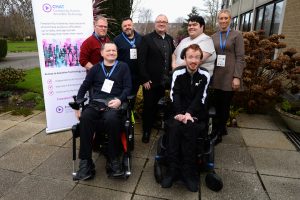
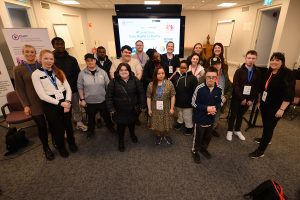
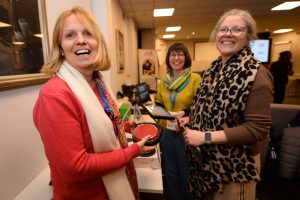
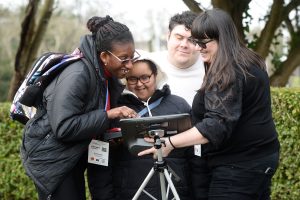
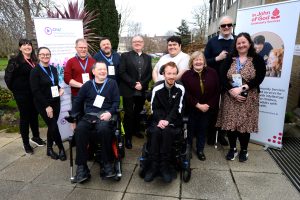
The event was part of the Community Hub for Accessible Technology (CHAT) programme and
highlighted the role of assistive technology in promoting rights, inclusion and independence
for people living with a disability.
PHOTO: Justin Farrelly
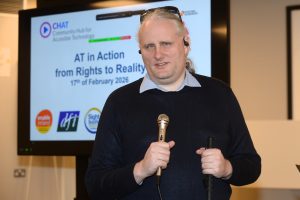

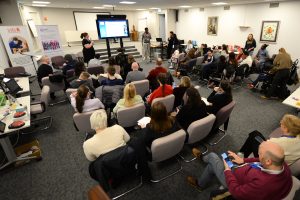
PHOTO: Justin Farrelly