CHAT @ Trinity: Access to STEM – Assistive Technology Supporting Inclusive Classrooms
Date: Friday 6th June 2025
Time: 2:00 PM – 3:30 PM
Venue: An Mheitheal, Printing House Square, Trinity College Dublin
Hosts: Trinity Civic Engagement and disAbility Service, with CHAT (Community Hub for Accessible Technology)
CHAT Overview
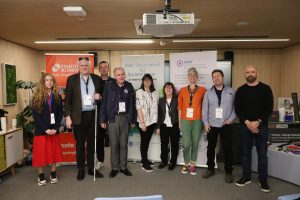
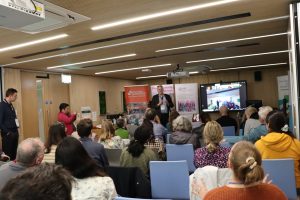
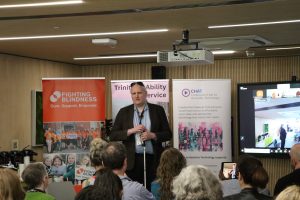
On June 6th, 2025, Trinity College Dublin hosted the latest CHAT event, focused on “Access to STEM: Assistive Technology Supporting Inclusive Classrooms.” Organised in collaboration with Trinity Civic Engagement, Fighting Blindness, and Trinity’s disAbility Service, this dynamic session brought together national and international thought leaders, educators, students, and innovators to share how Assistive Technology (AT) is breaking barriers in STEM education.
The event welcomed over 80 attendees in person and online, providing a lively forum for sharing practices, projects, and lived experiences. The day’s theme centred on inclusion, creativity, and opportunity, placing young people and their access needs at the heart of STEM transformation.
Welcome
Sarah opened the CHAT event by highlighting the community’s ongoing mission to centre user voice, share knowledge, and drive inclusive innovation. She welcomed Vicky Twomey-Lee as the session’s MC.
Declan Trainer, Director of Disability Services, and Andrew Costello, disAbility Service Officer, warmly welcomed Trinity and reaffirmed the university’s commitment to inclusive education.
Michael Foley, from Trinity Civic Engagement, noted:
“Her [Dr. Emilie Giles’ experience of working with people with sight loss on textiles that could speak, play sounds and respond to touch inspired me—not just because they were cool and handmade, but also, the workshops allowed the participants to think and talk about their own hopes and desires… It was a starting point for future conversations and collaborations about inclusive STEM.”
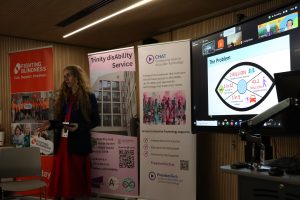
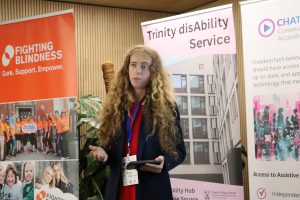
Presentations
- Declan Meenagh (Vision Code, Trinity College Dublin & Fighting Blindness)
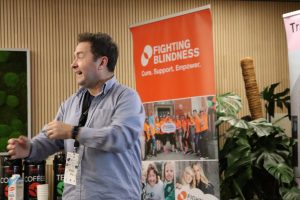
Declan introduced Vision Code, a collaborative project that teaches Python and Micro:Bit to blind and vision-impaired learners using assistive technologies. He highlighted the importance of co-designed, interest-driven learning and role models’ role in building confidence in coding.
- Niamh Fortune (DigiCoach, SAID Project)
Niamh shared her role as a DigiCoach supporting primary schools. She demonstrated how peer-led models can build AT literacy and ensure pupils with or without disabilities have early, positive engagement with accessible STEM.
- Emily Giles (Arts University Bournemouth)
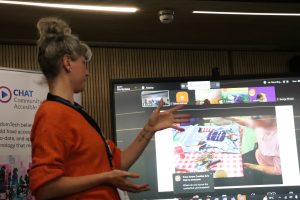
Emily explored creative, participatory learning and the power of integrating AT with art and coding to unlock inclusive design thinking. As a senior lecturer in graphic design, Emilie showcased her work in programmable textiles and creative coding. She emphasised the power of hands-on, inclusive maker culture to help learners with vision impairments become creators of technology. Her projects demonstrated how e-textiles can be expressive and educational, encouraging participants to imagine new roles in STEM.
Network and Technology Showcase
Participants explored demos of assistive technologies supporting accessible STEM learning. Displays included Micro:Bits, text-to-speech software, braille displays, and the accessible education STEM tools with the DigiCoaches Osmo, Book Creator and BlueBot.
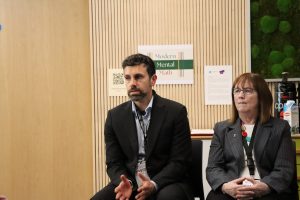
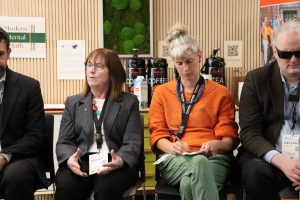
Panel Discussion
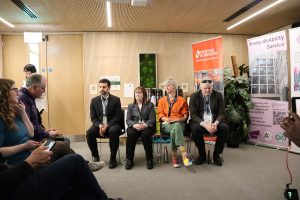
Chair: Stuart Lawlor (Sight and Sound Technology Ireland)
Panellists:
- Dr. Emilie Giles – Inclusive maker culture and tactile technologies
- Dr. David Mothersill (National College of Ireland) – STEM family learning and digital inclusion in community settings
- Sheila Porter (SciFest) – Science fairs and inclusion at secondary level
- Declan Meenagh (Vision Code) – Coding and vision impairment
Each panellist shared strategies for supporting inclusive STEM learning:
- Value of hands-on, interest-driven learning
- Need for accessible formats from the beginning
- The critical role of teachers and mentors
- Challenges of systemic access and the importance of community-based models
Panel Discussion – Key Questions and Answers
- How does creative technology help remove barriers in STEM education for learners with disabilities?
Emilie Giles emphasized how programmable textiles and physical computing can provide alternative, engaging entry points into STEM for learners who may struggle with traditional instruction methods.
- What challenges and solutions have you seen when integrating AT in formal STEM education?
Sheila Porter shared insights from SciFest, noting that while accessibility challenges exist, teacher awareness and inclusive judging frameworks have improved participation. She emphasized the need for tools like screen readers and tactile models.
- Can community engagement and interest-led learning reshape how we support students with disabilities in STEM?
David Mothersill highlighted intergenerational programmes and how shared digital learning spaces foster inclusive practice and resilience in underrepresented learners.
- How do we ensure AT is not just added on, but embedded in inclusive education models?
Declan Meenagh shared how Vision Code integrates AT like screen readers from the outset, allowing students with sight loss to build digital confidence through relevant, co-designed projects.
- What role do mentors and peers play in building AT confidence in classrooms?
All panelists agreed that role models and guided peer support are key enablers. Niamh Fortune’s DigiCoach example showed how early exposure helps pupils grow familiar with AT in a positive way.
The panel closed with reflections on Universal Design for Learning (UDL), highlighting that inclusive classrooms benefit all students not just those with disabilities.
Key Contributions
- Maura Moore-McCune (SciFest Winner)
Maura presented her project VIPMOD: Vision Impaired Person’s Moving Object Detector, a wearable device that helps detect fast-moving objects like cars. Maura won the SciFest STEM Champion 2024 title and represented Ireland at the 2025 Regeneron International Science and Engineering Fair in Ohio.
- Isabel Meza Silva (STEM Passport for Inclusion, Maynooth University)
Isabel shared how the STEM Passport programme supports girls and underrepresented learners to access STEM opportunities. She emphasized how structural supports and partnerships open real pathways to higher education.
- Dr. Glenn Strong (Trinity College Dublin, Pytch)
Glenn spoke about the Pytch coding platform and its role in engaging new learners in STEM, particularly through schools and open access projects.
- Dr. Patricia McCarthy – Closing Reflection
Patricia summarised the event with a call to action. She highlighted common threads—creative use of AT, participatory and learner-led design, and the role of teachers as catalysts for inclusion. She reminded participants that “assistive technology isn’t just about devices—it’s about access to opportunity, agency, and belonging in STEM for every learner.”
Key Themes & Takeaways
- AT as a gateway: Assistive technology enables participation, creativity, and independence in STEM.
- Learner voice matters: Many projects demonstrated the value of youth-led design and learner agency.
- Universal Design for Learning (UDL): Repeatedly cited as a foundational framework to structure inclusive classrooms.
- Teachers as change-makers: Educators need the confidence, tools, and support to embrace AT.
- Hands-on engagement: From wearable tech to visual coding, tactile and interactive methods stood out.
Acknowledgements
- CHAT @ Trinity was supported by:
- Trinity Civic Engagement
- Fighting Blindness
- Trinity disAbility Service
- CHAT Community
Special thanks to all the presenters, panellists, Vicky Twomey-Lee for MC, hosts and attendees for making the day so engaging and impactful.
Looking Ahead
The conversations sparked at CHAT @ Trinity will continue through FreedomTech and Vision Code’s upcoming workshops. Follow-up events and collaborations are already being discussed to further inclusive STEM practices across schools, higher education, and community programmes.