Event Report | 12 October 2026 | TU Dublin, Grangegorman & Online
Exploring Assistive Technology research in Ireland – and how technology is making research itself more accessible.
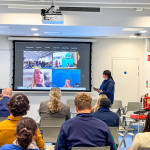
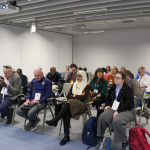
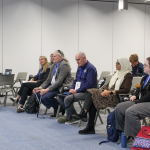
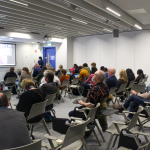
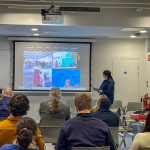
On Monday 12 October 2026, FreedomTech CHAT brought together researchers, people with lived experience, disability organisations, policymakers, practitioners and technology innovators to explore two connected questions: What are we learning through Assistive Technology research, and how can Assistive Technology enable more people to participate in research themselves? The hybrid event formed part of Accessibility in Action @ TU Dublin 2026, marking World Sight Day, and was an Associated Event of the Irish Presidency of the Council of the European Union 2026. The conversation moved from international leadership and national research evidence to practical examples of research influencing policy, and the experiences of disabled researchers navigating access to Assistive Technology. A recurring message emerged: research, policy and technology must be shaped with people who use Assistive Technology, not simply developed on their behalf.
Setting the Scene: Ten Years of Building Ireland’s AT Ecosystem
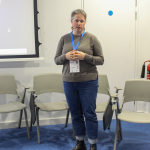
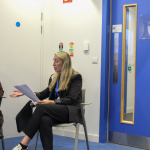
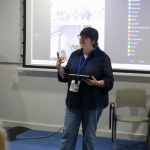
Sarah opened the CHAT by reflecting on the development of the Assistive Technology evidence base in Ireland and internationally.
The starting point was the 2016 FreedomTech Discussion Paper, Assistive Technology for People with Disabilities and Older People, developed by Enable Ireland and the Disability Federation of Ireland. The paper identified fragmented provision and called for stronger national coordination, an AT Passport, improved funding and greater investment in research and innovation. The discussion traced subsequent developments through the 2017 WHO GREAT Summit, the 2019 GReAT Consultation, the 2022 WHO/UNICEF Global Report on Assistive Technology and Ireland’s WHO Assistive Technology Capacity Assessment undertaken during 2024–2025. The publication of the Irish ATA-C Report in 2026 provided an important foundation for considering national strengths, challenges and future priorities. Ten years after the original FreedomTech Discussion Paper, the question for the CHAT community was:
What evidence do we need next?
Participants were encouraged to consider the research already happening across Ireland, where evidence gaps remain and how AT users can become active partners in developing new knowledge.
International Perspective: Building Strong National AT Systems
Satish Mishra – ATscale, Global Partnership for Assistive Technology
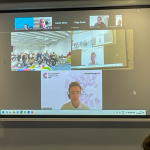
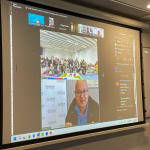
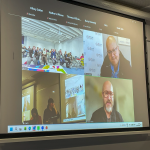
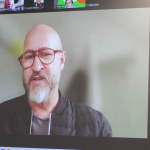
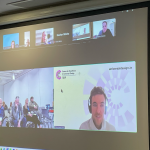
Satish Mishra joined remotely from Geneva to discuss what effective national leadership and coordination for Assistive Technology looks like, drawing on ATscale’s international experience. He highlighted a fundamental challenge: responsibility for AT is often spread across government departments, agencies and services, allowing important issues to fall between organisational boundaries. Effective national systems require clear government leadership, defined responsibilities, coordination across sectors and meaningful involvement of AT users. Satish challenged the community to reconsider how national AT systems are developed. Too often, researchers, disability organisations and service providers must continually push governments to prioritise AT. He suggested moving towards a model in which governments and AT users sit at the centre of national leadership, with other stakeholders contributing their expertise.
For Ireland, his central message was the importance of political commitment and government ownership to ensure that national AT programmes become sustainable. During questions, Hector Minto raised the changing role of disabled people as informed consumers of technology, rather than individuals who must always wait for formal assessment before identifying suitable solutions. The exchange highlighted the opportunities created by digital technology, while recognising the continued importance of reliable information, appropriate services and user involvement in technology development.
Researching Assistive Technology: Evidence from Ireland
Dr Aoife McNicholl – Dublin City University
Dr Aoife McNicholl presented findings from several strands of her Assistive Technology research, examining educational outcomes, identity, online learning and independent living.
One study involving 111 disabled higher education students found that students whose AT needs were fully met reported significantly better educational engagement, including academic performance, communication with peers and completing academic tasks under pressure. Positive differences were also identified in wellbeing and academic self-efficacy. Aoife also shared research exploring how AT influences identity and belonging. Interviews with disabled students highlighted that technology can strengthen independence and confidence, but that concerns about stigma or appearing different can discourage its use. Research into online learning identified the importance of timely technical support, universal design for learning and more inclusive digital environments. Her presentation also explored the NEXT smart home project, involving interviews with 22 older adults. Technologies including sensors, smart plugs, smartwatches and voice assistants offered opportunities to support independent living, monitor wellbeing and provide reassurance. However, participants also raised concerns about affordability, privacy, data access and whether monitoring technologies were appropriate to their individual circumstances. The research demonstrated that successful AT provision must consider more than technical functionality. Identity, confidence, choice, privacy, affordability and responsive support all influence whether technology delivers meaningful benefits.
Exploring Assistive Technology and Smart Homes in Ireland
Dan Eames – National Disability Authority
Dan Eames, Senior Digital Design Advisor with the National Disability Authority’s Centre for Excellence in Universal Design, introduced the NDA’s work exploring housing-related Assistive Technology and Smart Home Technology. Dan clarified that this is an exploratory project involving desk research and stakeholder engagement, rather than a formal NDA research study. The project is an action under the implementation plan of the National Housing Strategy for Disabled People and examines how AT and smart home technologies can support disabled people and older people to live independently. Its scope includes technology availability, effectiveness, relevant policy, funding approaches, service delivery and the relationship between AT and universally designed housing. The stakeholder engagement phase included eight focus groups involving approximately 60–70 people, including disabled people, older people, carers, service providers, technology specialists and disabled people’s organisations.
Dan shared emerging themes from the engagement, including:
-
The cost of technology and difficulties accessing reliable, current information.
-
Concerns about privacy, surveillance and the potential replacement of human support.
-
Rapid technological change and the challenges of keeping equipment and knowledge up to date.
-
Opportunities for people to adapt, experiment with and innovate using existing technologies.
-
A strong appetite for sharing practical knowledge and learning.
The project was still undergoing analysis at the time of the CHAT. Dan outlined plans to deliver guidance to government in the first quarter of 2027, followed by public publication in the second quarter.
The presentation reinforced the importance of connecting technology innovation with housing policy, universal design, informed choice and the experiences of people using technology in their homes.
From Research to Practice: The ARISE Policy Framework
Dr Emma Smith: University of Limerick, and Christina Cannon – Saint John of God Community Services
One of the most practical examples of research influencing policy came from Dr Emma Smith and Christina Cannon.
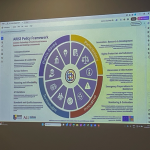
Emma introduced the ARISE Framework, developed through research undertaken during her postdoctoral fellowship at Maynooth University. The framework supports the development and evaluation of inclusive and resilient Assistive Technology policies. Its development involved literature reviews, analysis of European policy approaches and engagement with AT users, disabled people’s organisations and service providers. Emma explained that the framework is built around four principles: rights-based, participatory, sustainable and innovative. These are supported by 11 components addressing areas such as governance, service delivery, financing, workforce development, quality assurance, advocacy, information, emergency preparedness and evaluation.
Christina Cannon, a Speech and Language Therapist with Saint John of God Community Services, then demonstrated how this research was being applied within a disability service. The organisation had previously developed an AT policy in 2020, but it had not progressed to approval. Following engagement with Emma’s research, a multidisciplinary working group used the ARISE evaluation tool to assess the earlier draft, identify gaps and guide the development of a revised policy. The working group included AT users, staff, co-design specialists, therapists, AT facilitators and advocacy expertise. The process placed particular emphasis on meaningful participation, accessible policy development, peer support and recognising access to AT as essential rather than optional. Christina also explained how the organisation considered relevant recommendations from Ireland’s WHO ATA-C Report and developed a draft AT competency framework. At the time of the CHAT, the revised policy was awaiting organisational approval. Its development nevertheless provided a practical example of how an evidence-based framework can help a service translate research into organisational change. The contribution demonstrated that research does not need to remain within academic publications. With accessible tools and genuine co-design, it can support the development of more inclusive policies and services.
Panel Discussion: How Assistive Technology Enables Research
Chaired by Dr Emma Murphy – TU Dublin
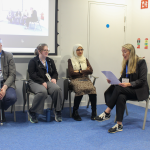
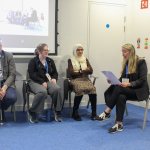
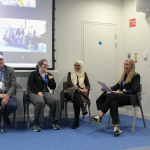
The panel brought together three contributors with different experiences of Assistive Technology, disability, research and accessibility.
The discussion explored how AT can support disabled people to become researchers, what barriers remain within research institutions and how knowledge can be shared across disability communities.
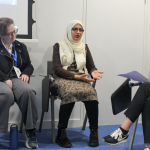
Dr Hafsah Ahmad: Dundalk Institute of Technology
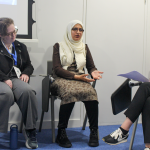
Dr Hafsah Ahmad, a Research Fellow in the Connected Health and Wellbeing Cluster at Dundalk Institute of Technology, discussed how her lived experience of visual impairment influences her research. Her work explores multisensory integration and how remaining vision, sound and cognition can work together to support people with sensory impairments. Hafsah emphasised that technology should not be developed simply because it is technically possible. Research should begin by understanding people’s experiences and identifying how technology can make a meaningful difference to everyday life. Her contribution reinforced the value of lived experience in shaping research questions, evaluating technology and identifying outcomes that matter to users.
Andrea Heaney: TU Dublin
Andrea Heaney, a PhD researcher at TU Dublin working in machine learning, ethical AI and fairness in women’s healthcare, shared her experiences of accessing Assistive Technology in higher education. Andrea described the challenges of transitioning between undergraduate and postgraduate study, including changes in assistive software, differences between institutional supports and the withdrawal of access to a premium writing-support tool without adequate advance communication. Her experience highlighted an important gap: disability and AT supports within universities are often designed around undergraduate learning and examinations, while doctoral researchers have different requirements. The discussion identified opportunities to improve communication between graduate research schools, disability services and postgraduate researchers. Andrea’s contribution raised a wider question for universities: Are existing AT policies designed to support disabled people throughout their research careers, or primarily during undergraduate education?
Declan Meenagh – Fighting Blindness
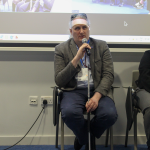
Declan Meenagh, Advocacy and Policy Manager at Fighting Blindness and a partner in the DigiCoach Programme, reflected on how working across disabilities has expanded his understanding of accessible technology. The DigiCoach Programme brings together people with different disabilities to develop and share digital accessibility and AT expertise. Declan explained how this pan-disability approach creates opportunities to learn from one another and identify technologies that can support people with a range of access needs. He shared examples of DigiCoaches developing simple digital games to help people with sight loss and intellectual disabilities learn touchscreen gestures, including swiping. These examples demonstrated how peer learning, collaboration and accessible technology can create solutions that might not emerge within traditional disability-specific services.
Declan also challenged repeated assessment processes, highlighting the importance of portability and continuity of AT support as people move between education, services and employment.
Audience Discussion: Continuity of Support
An important theme emerged from the panel and audience discussion around the need for Assistive Technology supports that follow the person.
Participants questioned why individuals may need to repeat assessments, learn different software or re-establish their support needs when moving between institutions.
The AT Passport was highlighted as one potential approach to improving continuity and reducing unnecessary duplication.
The discussion also identified the need for stronger links between postgraduate research programmes and university disability services, alongside more accessible information about the supports available to doctoral researchers.
These conversations reinforced the importance of treating Assistive Technology as an ongoing enabler of education, employment and research participation.
Shout Out: Kerbcut
Hector Minto – Founder, Kerbcut
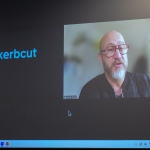
Hector Minto introduced Kerbcut, a newly launched initiative aiming to make Assistive Technology easier to discover and understand.
Drawing on his extensive experience in accessibility, Hector described a persistent challenge within the AT ecosystem: information about available technology, providers and practical solutions is fragmented and does not consistently reach the people who need it.
Kerbcut aims to address this through an AI-powered conversational platform that connects users with relevant products, professional expertise and real-world experiences.
Hector explained the ambition to make AT information available in the places people already seek support, including education, employment and care environments.
He also highlighted the value of content created by disabled people themselves, including demonstrations and practical experiences shared through digital platforms.
The presentation raised opportunities for improving AT discovery, supporting informed choice and helping a wider range of professionals access reliable technology information.
It also connected with earlier discussions about moving beyond systems that depend entirely on formal assessment towards approaches that give people greater control over identifying suitable technology.
Looking Ahead: UK–Ireland Collaboration
Mark Halvey – British Embassy Dublin
Mark Halvey joined the CHAT to highlight opportunities for collaboration between the UK and Irish Assistive Technology communities.
He outlined upcoming activities in February 2027, including an event supported by the British Assistive Technology Association on 25 February and a British Embassy reception during the same period.
Mark also invited feedback from organisations and individuals experiencing difficulties or increased costs when importing AT products and replacement parts from the UK.
His contribution highlighted the importance of international connections, supply chains and cross-border cooperation in supporting access to Assistive Technology.
Key Messages from CHAT
Several interconnected themes emerged throughout the event.
1. National AT leadership needs clear ownership
Effective coordination requires government commitment, defined responsibilities and meaningful participation by people who use AT.
2. Research demonstrates the wider value of AT
Access to appropriate technology influences education, independence, confidence, wellbeing and participation, not simply the completion of individual tasks.
3. Lived experience must shape research
People with disabilities bring essential expertise to identifying research questions, evaluating technologies and defining meaningful outcomes.
4. Research can directly influence policy
The application of the ARISE Framework demonstrated how research can inform accessible, rights-based and co-designed organisational policy.
5. AT support must extend across life transitions
Moving between educational institutions, research programmes, employment and services should not create unnecessary barriers to continued technology access.
6. Knowledge sharing is essential
Peer learning, pan-disability collaboration and better access to information can help technology reach more people and support more inclusive research.
What Evidence Do We Need Next?
The event was designed to begin identifying the next priorities for Ireland’s Assistive Technology research community.
The presentations and discussions pointed towards several areas for further exploration: national coordination and governance, the impact of AT across education and independent living, continuity of supports, accessible research participation, technology affordability, privacy, and effective ways to translate research into policy.
There was also a clear opportunity to improve visibility of existing research across universities, disability organisations, services and industry.
The CHAT invited participants to share their knowledge through Sli.do with questions focused on existing AT research, accessibility and evidence gaps.
The session generated useful discussion, but the available transcript does not provide a complete set of Slido responses or an agreed national research priority list. These would need to be reviewed separately before presenting them as formal outcomes.
Looking Ahead
CHAT – Researching AT, Enabling Research demonstrated the value of bringing together international evidence, Irish research, practical policy development and the experiences of disabled researchers within one conversation.
The event also highlighted the role of CHAT as a community of practice connecting people across traditional organisational and sectoral boundaries.
Future opportunities include developing a clearer picture of AT research taking place in Ireland, strengthening connections between researchers and AT users, sharing accessible research methods and continuing to explore how evidence can inform national AT policy and service development.
The next FreedomTech CHAT was announced for 2 December 2026, with a focus on Ireland’s Assistive Technology ecosystem and a gathering at the Department of Children, Disability and Equality.
The October CHAT reinforced a central message:
We need to research Assistive Technology, but we must also ensure that Assistive Technology enables more people to become researchers, co-researchers and leaders in the development of knowledge.
Acknowledgements
FreedomTech CHAT would like to thank all speakers, panelists, participants and community partners who contributed to the event.
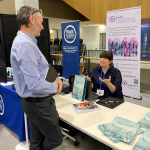
Special thanks to TU Dublin, its School of Computer Science and research community, Sight and Sound Technology Ireland, and the organisers of Accessibility in Action @ TU Dublin 2026 for providing the opportunity to connect CHAT with the wider World Sight Day programme.
We also acknowledge the contributions of Enable Ireland and the Disability Federation of Ireland, whose FreedomTech partnership continues to support Ireland’s national Assistive Technology community of practice.
Event Resources